Technology Helps Easy and Practical Accessible Curriculum Teaching
The Problems and the Solution
Due to challenging time constraints and unrealistic pacing guides in education, curriculum instruction is often like getting on an “elevator,” one day going to the 24th floor, and the next day back down to the 4th floor, and the following day, shooting up to the 60th floor – with instructional lessons not linking with each other.
Students of all abilities often struggle to know the “WHAT, WHY, and HOW” of their instruction and how one lesson relates to the next. I can attest to this because I spend a great deal of time in schools mentoring and coaching classroom teachers, special educators, therapists, specialized consultants, and instructional support staff.
The solution is to deliver instruction in a “connect-the-dots” teaching and learning approach.
This means methodically taking the stairs, instead of the elevator, and sequentially achieving one step of mastery at a time – drawing a line from one lesson to the next – to significantly improve overall academic performance.
It is critical that educators have a systematic roadmap that is easy to follow for teaching anything to anyone at any grade level. In addition, it is also crucial that this curriculum solution work with students of any ability, from gifted to special needs – and every learner in between, to bridge the gap between special education and general education and foster meaningful inclusion of students with disabilities using inclusive strategies.
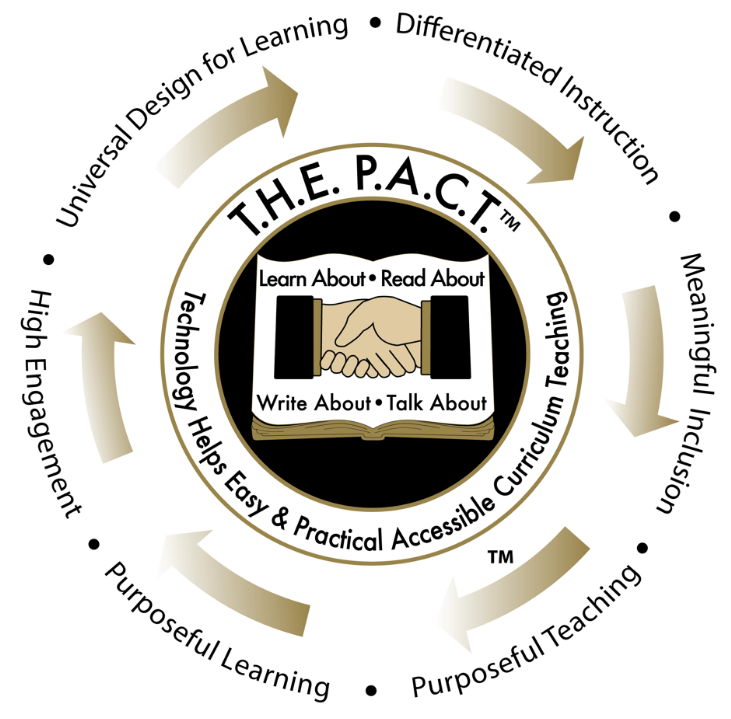
T.H.E. P.A.C.T. methodology is a simple, research-based teaching framework for learning. This delivery system for instruction is only four steps, which means that it is easy to implement in a jam-packed school day.
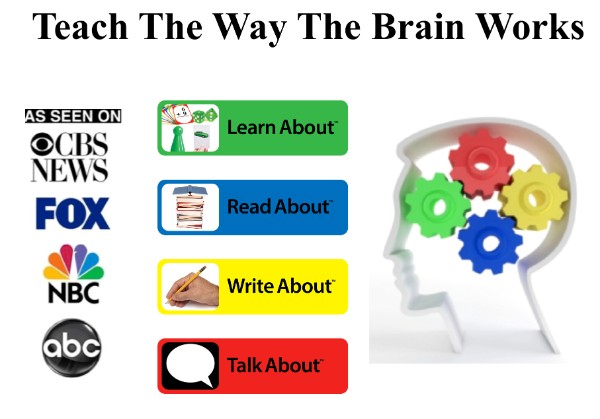
These four components are presented in the framework as a “Module System” – Learn About, Read About, Write About, and Talk About – aligned to the vital components of educational standards. Educators, from preschool to high school, are now gaining control of their instruction, decreasing their prep time, and meaningfully including learners with disabilities in their classrooms.
T.H.E. P.A.C.T. is Founded on Brain-Based Research
As educators, we need to provide instruction in this order, based on the longstanding research of how the brain works, which is to teach an understanding of content before we test what was learned. This significantly helps students succeed. This system of teaching provides “connect-the-dots” instruction, so that both students and teachers understand WHAT they are doing and WHY. Students understand the relevance of what they are learning. This results in greater engagement and deeper learning.
Regardless of subject or topic of study, teachers methodically walk students through “learning about” it, “reading about” it, “writing about” it, and “talking about” it. Educators do this in a way that allows students to feel anchored with the “HOW-TO-DO-IT” part, by using consistent teaching activities and predictable instructional materials.
The students focus on “what” they are learning, instead of “how” they are learning it. This significantly decreases cognitive load for students of all abilities.
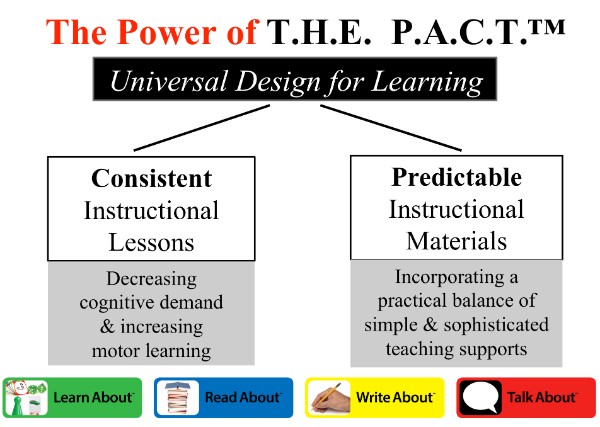
Foundational Principles of T.H.E. P.A.C.T.
The Benefits
Educational staff now know what to do: how to focus their time, streamline their time, organize their time, and be successful at what they need to do when showing students how one lesson connects to the next.
With this methodology, educators can reach students of all abilities in their classroom, resource room, specialized classroom, or therapy setting and build a real solid understanding of whatever material they are teaching.
Teachers often feel that they are no longer in control of how they teach. The beauty of this system of instruction is that educators can come up with their own creative activities for lessons in each of the four steps.
This in turn, speaks to an educator’s own style of teaching, without anyone telling “how” to teach it. But once decided “how” to teach it, these teaching activities are then used consistently to anchor learners and streamline lesson planning. Then, educators can systematically grow activity sets for each module of T.H.E. P.A.C.T. over time to keep it very creative and dynamic.
It is important to know that T.H.E. P.A.C.T. is not product-specific. T.H.E. P.A.C.T. is also not content-specific. T.H.E. P.A.C.T. is PROCESS-SPECIFIC.
The Four Modules of T.H.E. P.A.C.T.
The Learn About and Read About Modules are Receptive Language Modules – focusing on building comprehension of content.
The Write About and Talk About Modules are Expressive Language Modules – focusing on improving expression and communication.
Each of these modules are color-coded: green, blue, yellow, and red.
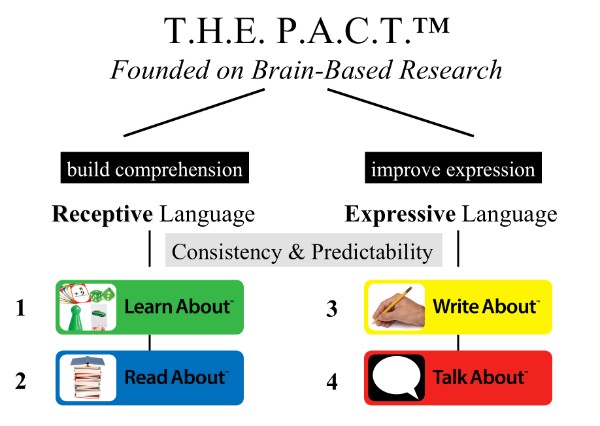
The Language-Based Model for Effective Instruction
Ben, a sophomore student, describes that T.H.E. P.A.C.T. helps him know which Pile to go to in his brain. When he sees a color, he knows what his brain is supposed to do. This helps students succeed.
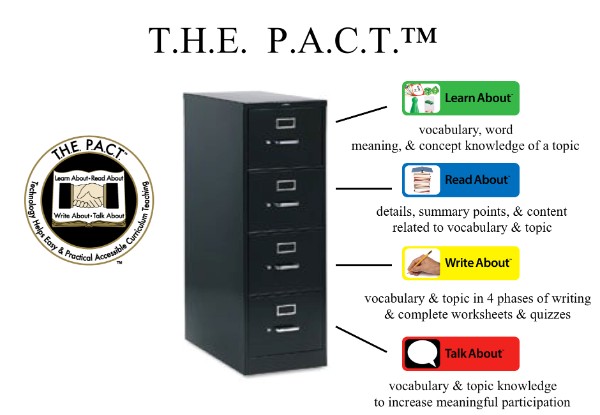
The 4-Step Roadmap To Teach AnyTHING to AnyONE
When delivering sound instruction at any grade or age level to aid in students achieving their potential, there are four specific components for building comprehension and expanding expression of language – because curriculum is language:
- Organization: This relates to organizing your content, the flow of each lesson, and the instructional materials.
- Structured teaching: This encompasses creating a learning environment that has visual anchors to guide learners in each part of lesson or classroom routine.
- Consistency and predictability: This applies to not only classroom routines and procedures, but also to the types of lessons and instructional materials we use in a given content area.
- Customization: One size does not fit all.
Scott Blood
Scott Blood, K-12 Principal of Blue Mountain Union School, Wells River, Vermont
The Results
Each of these four components – organization, structured teaching, consistency and predictability, and customization – are hallmark foundational principles of T.H.E. P.A.C.T. research-based teaching framework.
When incorporating these four components into instruction using T.H.E. P.A.C.T., everyone knows:
- WHAT to teach
- In what FORMAT to teach it
- What to USE to teach it
- HOW to teach it
 “The students learning mathematics using the methodology of T.H.E. P.A.C.T. demonstrated much better understanding of mathematical concepts, and scored higher on grade-based standards, compared to those students not using the four module system of instruction in our eighth grades in middle school.”
By doing this, a systemized teaching plan is formed which fosters true collaboration. By definition, collaboration happens when two or more people work together towards a common goal or purpose. It involves people being able to contribute and communicate.
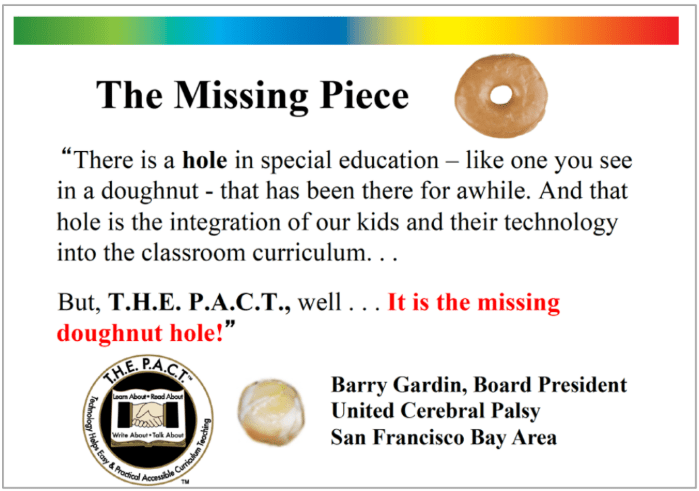
If time is put in up front to develop a systemized teaching plan in a collaborative process, it serves as a creative template system, which puts everyone on the same page – knowing WHO is doing WHAT and in WHAT sequence. This, in turn, saves time in the long run. It is working smarter – not harder.
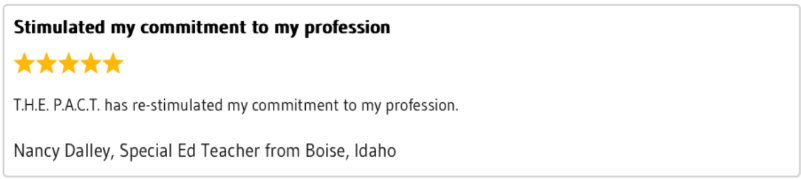
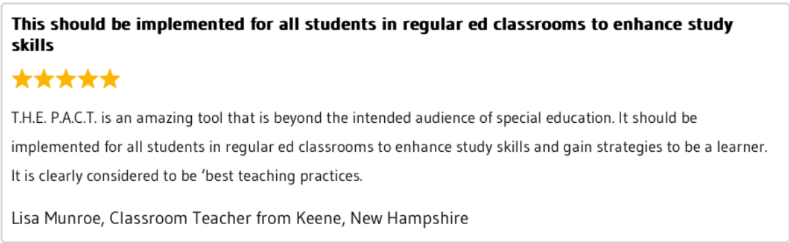
The bonus is that teachers are now meaningfully including learners of ALL abilities in their classrooms.
Bart Noe
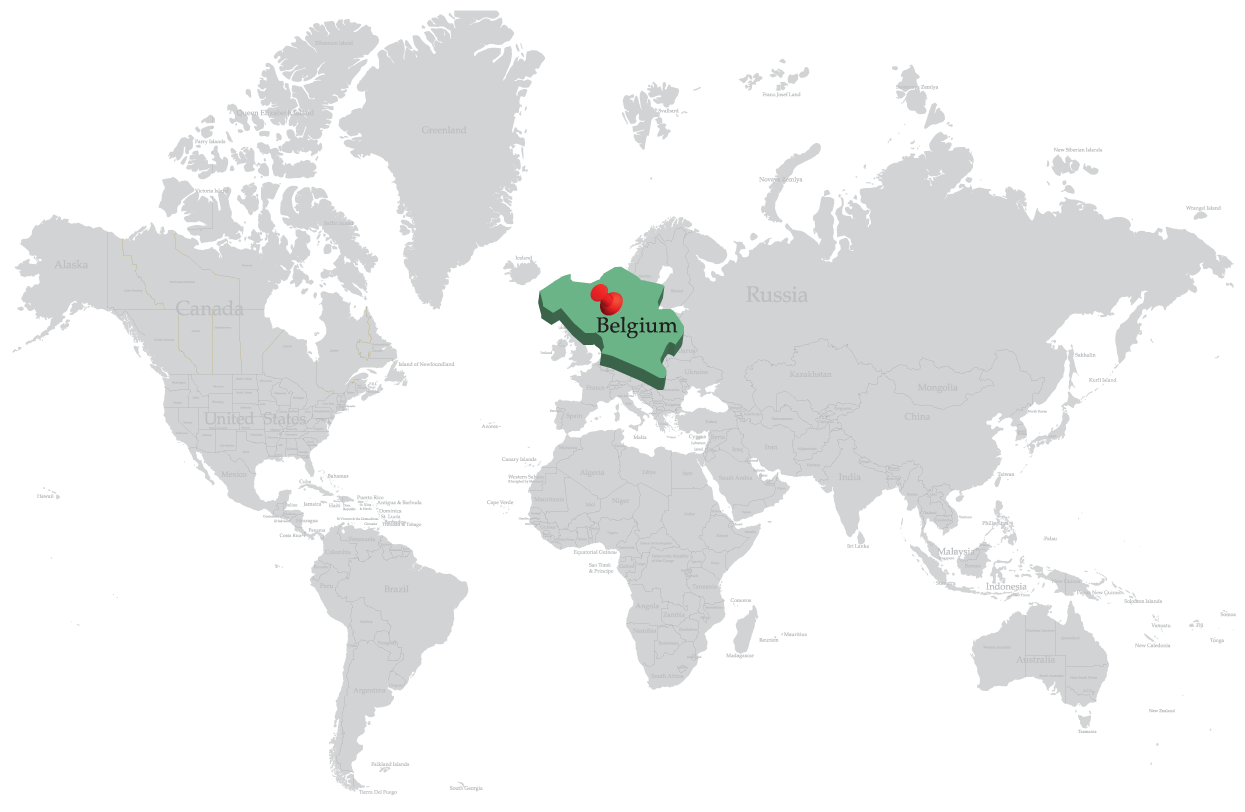
Bart Noe, Director of Jabbla, in Brussels, Belgium
T.H.E. P.A.C.T. is an easy framework for adapting or teaching ANY curriculum to ANY individual using the tools that are already available to you! You will have consistent tools to record progress and learners will have a practical framework to understand new information and communicate their knowledge.”
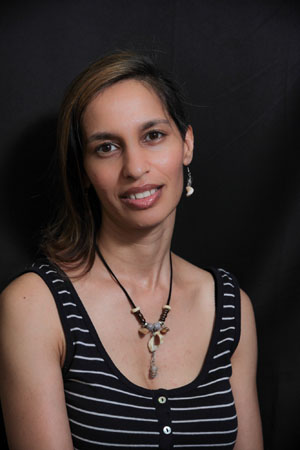
Haseena Patel
Haseena Patel, Co-Founder of Leave No Girl Behind International, Newcastle, Province of KwaZulu-Natal, South Africa