
The Comprehensive Instructional Assessment
Many assessments do not accurately reflect real-world skills or the way a student learns in authentic contexts. We sometimes are so caught up on the outside impact of standardized assessment that we forget that, in the real world, many of our students are not going to be presented with multiple-choice options. In reality, students learn thousands of things every year in schools that are not or cannot be measured on a standardized assessment.
One of the biggest myths related to testing is that an assessment can adequately report the entire picture when it comes to what a student is learning or how he or she is growing. Administrators must ensure that schools teach the curriculum for the purpose of ensuring student learning, as opposed to teaching for the purpose of scoring well on an assessment.
In addition, assessments can be a source of significant stress and anxiety for students of all abilities. This can manifest in various physical and emotional symptoms, impacting academic performance and overall well-being.
In special education, assessment is intended to identify a student’s learning strengths and needs; determine eligibility for special education services; and develop an Individualized Education Plan (I.E.P.). Most educators, however, struggle with taking most assessment information and crafting a meaningful I.EP. that is truly customized to a particular learner.
Standard assessments in special education may give insight into a student’s needs, but yet special education staff continue to have difficulty in taking information from these assessments and tailoring everyday instruction effectively.
These assessments often do not adequately provide a roadmap of how to draft an I.E.P. that is thorough and detailed. This frequently results in ineffective goals and generic accommodations that may not be personalized for a particular learner or straightforward for the teacher(s) to implement.
There are three specific problems educators face every day when trying to reach and teach students of diverse abilities:
- Not knowing the most effective strategies to use with a particular student to help them learn.
- Not knowing the best ways to get a student to participate and engage in instruction.
- Not knowing the detailed skills a student needs to successfully share what they know and what they have learned.
We are at a critical time in education in needing to improve the assessment process. An instructional diagnostic should embrace a more holistic approach to assessment that includes diverse and integrated methods to determine the best instructional strategies and focus areas of learning related to the individual student’s unique profile.
The fact of the matter is that each student we teach has their own unique learning language. If we, as educators, can speak with them in a language they know, then we will have a shared learning language and make impact to help each student truly reach their potential.
What is a learning language?
A learning language is the unique way a student understands and processes information. It is how a student can best tell you what they have learned and what they know.
This takes time to figure out. Teachers around the world are asking for help with this because of their demanding schedules and overwhelming workloads.

Gathering this information requires a specialist devoting the amount of time needed to outline and write this into meaningful I.E.P. goals, objectives, and accommodations for educators so that one school year connects to the next – as opposed to educational plans being disjointed from year to year.
Intentional Student Planning and Teaching
The goal is for educators to have a connect-the-dots multi-year educational plan for their students. It is not a dream; it becomes a reality.
The C.I.A. is a comprehensive assessment that dives in deep to get at the core of a student’s specific “learning language” related to:
- how to access the curriculum
- how to improve cognitive function and executive functioning skills
- how to incorporate both low-tech and high-tech solutions to serve as companion tools to access everyday lessons
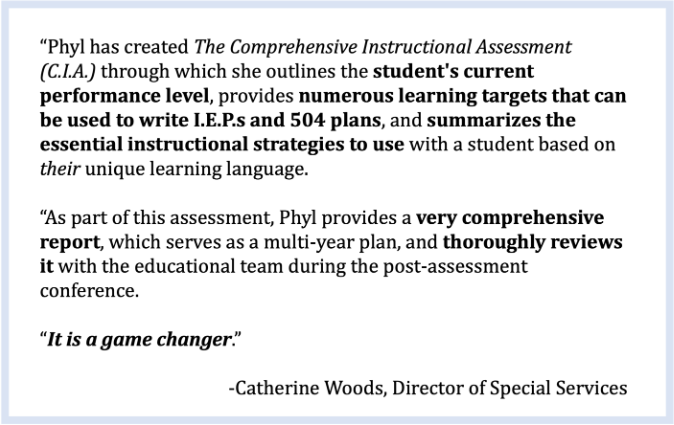
Created by Phyl Macomber, International Education Specialist, this assessment provides:
- The customized instructional strategies that are essential to use with your student or child
- How your student or child can best access curriculum content and materials to build and express knowledge
- How to incorporate the teaching and support of key executive functioning skills for your student or child aligned to specific competency areas of social and emotional learning
- How you can systematically teach your student or child to grow their skills in the assessment areas with detailed learning targets for the team to integrate into the student’s I.E.P. or 504 plan
The C.I.A. is being referred to as the “I.E.P. Express” because educators can quickly copy and paste, into the I.E.P. software, Phyl’s research-based goal areas, learning targets, instructional strategies, and accommodations into a specific student’s I.E.P. to finalize a meaningful and personalized education plan.
The C.I.A. diagnostic package includes the following:
- Pre-Diagnostic Meeting
- Diagnostic Sessions
- Team Conferences
- Documents Review and Comprehensive Report Writing
- Post-Diagnostic Meeting
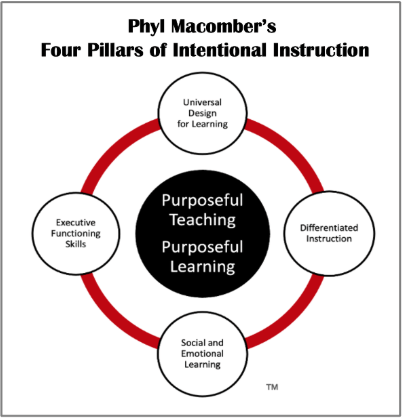
Phyl Macomber’s detailed assessment process identifies a student’s needs aligned to each of her Four Pillars of Intentional Instruction: Universal Design for Learning (UDL), Differentiated Instruction (DI), Social Emotional Learning (SEL), and Executive Functioning (EF).

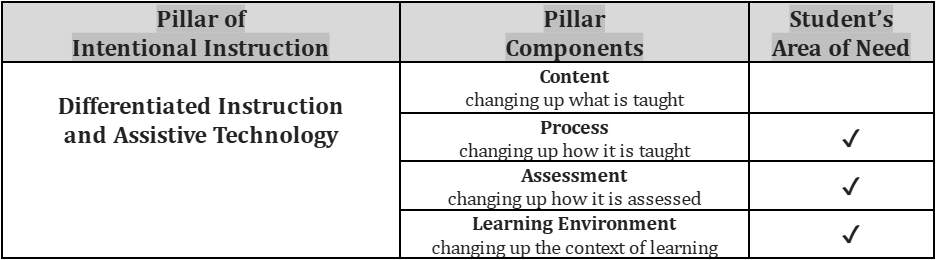
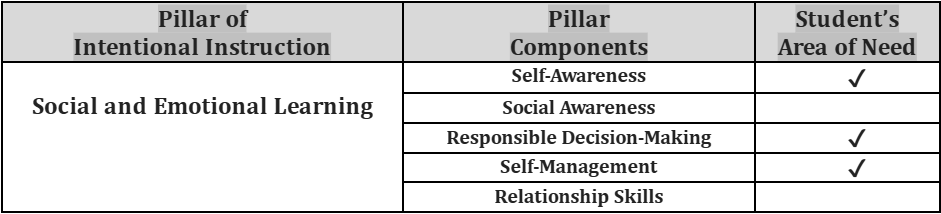
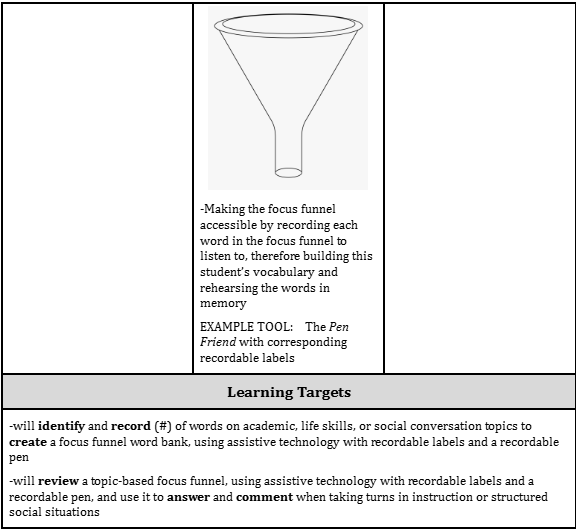
In each of the Pillar need areas, Phyl provides a detailed list of recommendations for tailored instruction that can be used in everyday lessons in any classroom. In addition, Phyl gives staff customized learning targets to add to the I.E.P.
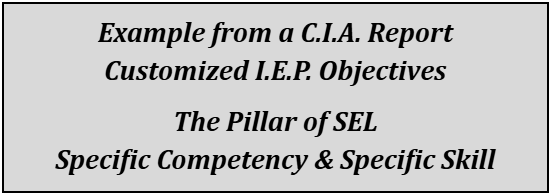
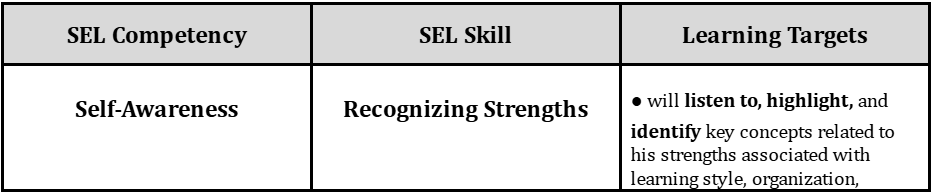
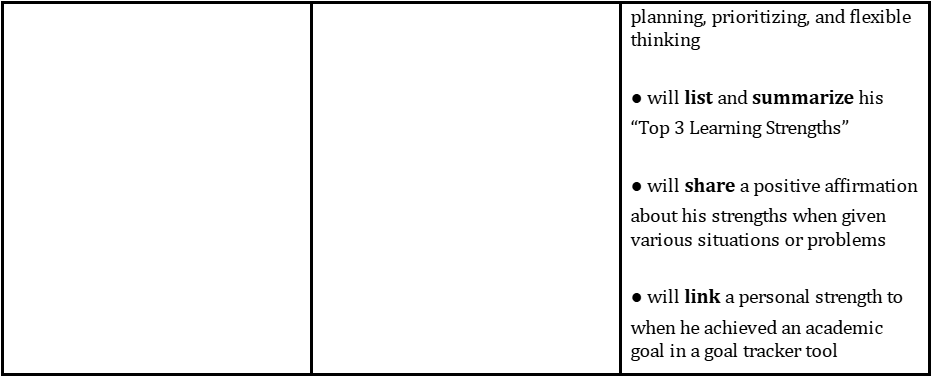
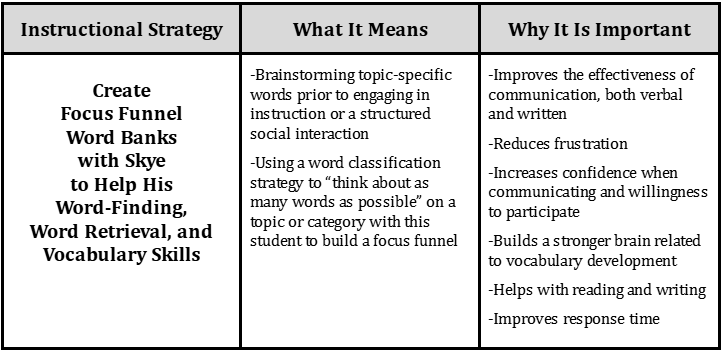
In addition to the Four Pillars of Intentional Instruction deep-dive, Phyl outlines the Top Essential Instructional Strategies to use with a specific student based on their learning language.
These high-leverage teaching strategies are research-based and used in Phyl’s international teaching model. Phyl introduces the instructional strategy, what it means, why it is important to use with a particular learner, and the individual learning targets for the I.E.P.


Following The C.I.A. post-diagnostic meeting, if a team or family wishes to have follow-up consultation with Phyl to assist with prioritizing and implementing the recommendations, the following packages are available:
- 3-Consultation “Follow-Up and Follow Along” Package
- 5-Consultation “Follow-Up and Follow Along” Package
- 8-Consultation “Follow-Up and Follow Along” Package
In these follow-up consultations, Phyl helps the team or family prioritize “which year you may do what” to ensure a seamless multi-year plan and a “connectivity” of an action plan related to the I.E.P. or 504 plan.
Phyl helps all involved improve their own prioritization skills as each person serving the student participates in prioritization decisions. This fosters a sense of ownership using what Phyl refers to as, “A who is doing what” format of shared responsibility.
Phyl also models how to implement her recommended goals and objectives by working with the student, educational staff, and family. This support may occur in different ways:
- In general education settings working with teachers
- In special education environments collaborating with special educators and instructional support staff
- In therapy settings working with speech-language pathologists and occupational therapists
As part of this follow-up package, Phyl can also monitor the progress of the student and the team. This is a crucial part of the implementation process – knowing when to pivot or dive in deeper. It ensures that the student is learning effectively and allows for timely adjustments to instruction. Phyl uses this data to modify lesson plans, adjust the pace of instruction, and provide targeted support to the student.