Purposeful Planning and Purposeful Teaching
Oftentimes, life skills programs teach meaningful “activities,” but do not thread “skills” and topics of instruction systematically across the key domains of life skills. Phyl Macomber refers to these as “popcorn” activities – or the “I downloaded this great set of worksheets from Teachers Pay Teachers that I found” approach.
Regardless of geographic area –Seattle to San Francisco, Bozeman to Des Moines, San Antonio up through Charleston, and across areas of New England, countless programs have used the “throw paint against the wall and see what sticks” teaching methods.
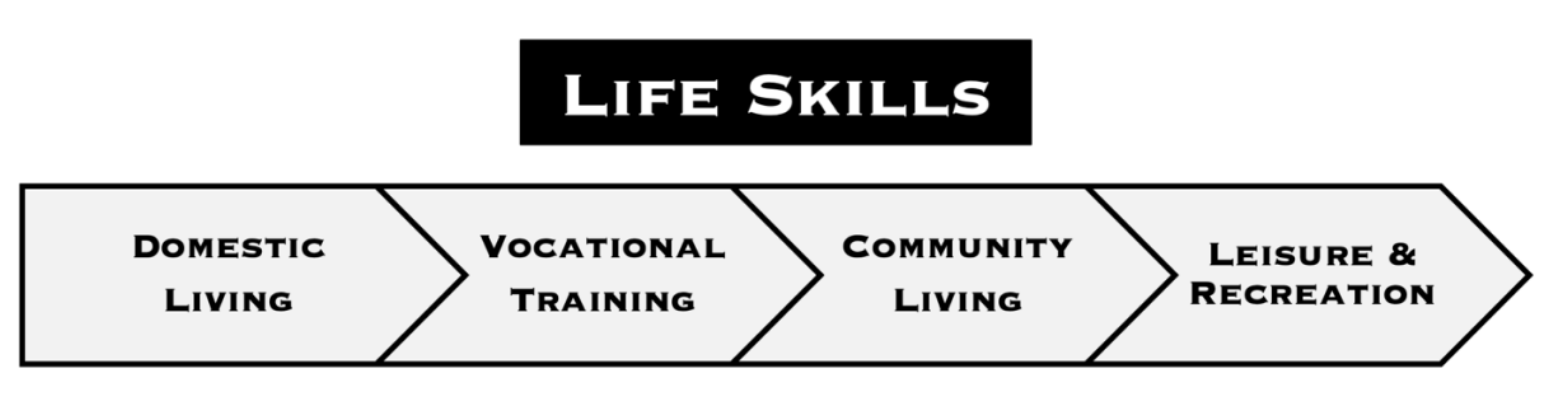
Life skills instruction, however, goes way beyond using stand-alone activities or creating arts and crafts. It involves purposefully identifying a category or theme area of instruction and incorporating it across the key domains of life skills in connect-the-dots lessons.
The populations of students who access life skills programs truly have “special” needs. And, with the proper systems and curriculum planning in place, we cannot only elevate the instructional practice of our educators serving these programs, but also better serve the students using a research-based model of curriculum planning (Macomber 2021).
High-quality life skills programs provide integrated units of instruction that develop and shape successful citizens within all community settings, resulting in high student engagement and voice. They use a skills-based curriculum approach aligned to the four domains of life skills with integrated functional academics to reach and teach students of varying abilities.
The underlying belief system is as follows:
- All children can and do learn
- All children can become successful citizens and make meaningful contributions
- All children benefit from purposefully and meaningfully planned lessons and units of instruction offering multiple representations of engagement, representation, action & expression
These functional academics and life skills are aligned to the four domains of life skills as outlined in the following table:
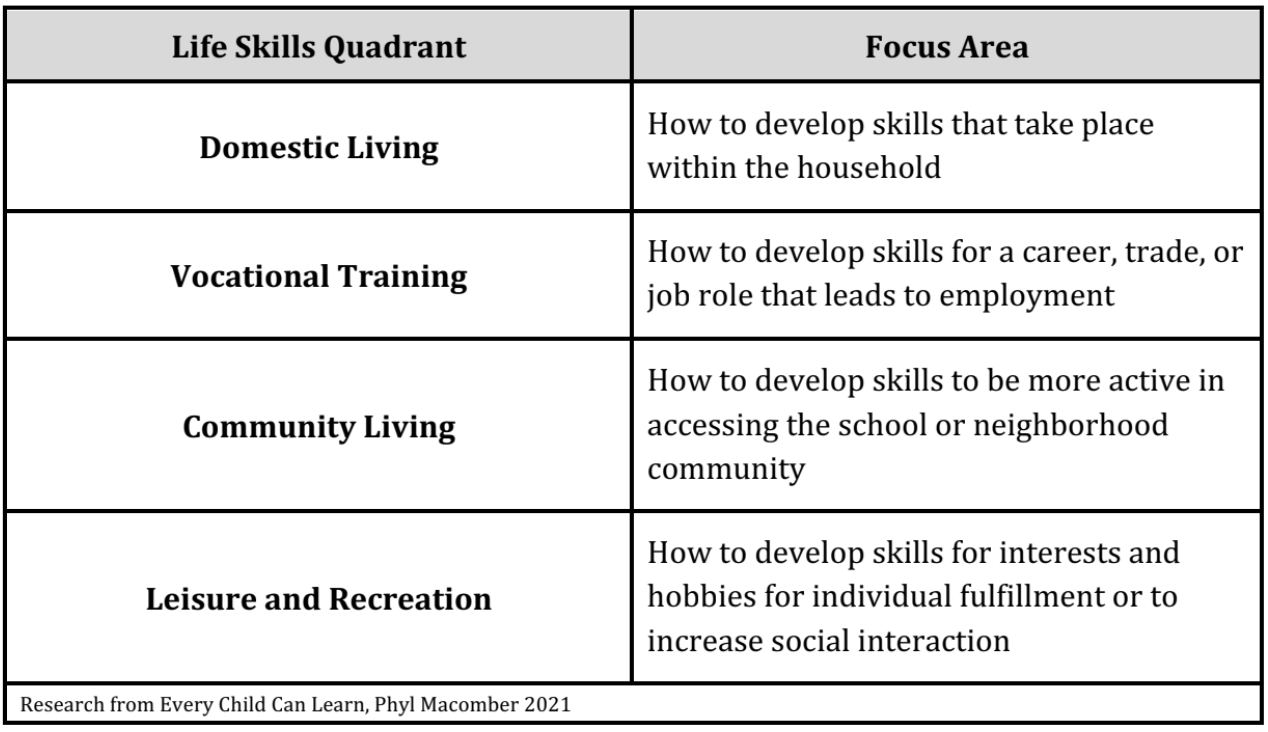
The Four Quadrants of Life Skills
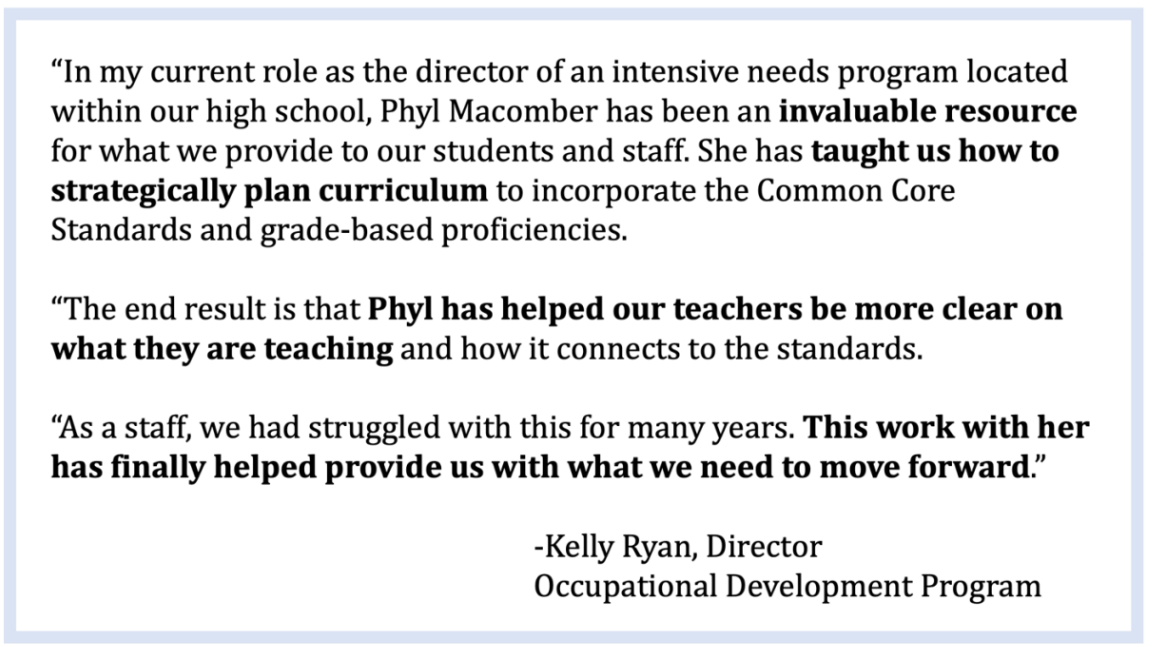
A well-planned life skills curriculum equips learners with practical skills for navigating daily life. The content emphasizes real-world application, fostering adaptability and resilience.
In working with Phyl Macomber, effective life skills curriculum planning (Macomber 2021) includes a methodical step-by-step process:
- Define the life skills themes or categories
- Structure the curriculum and align each theme or category across the four quadrants of life skills with four distinct topics of instruction
- Organize and sequence each of the quadrant topics into a series of connect-the-dot lesson formats
- Develop the content for each of the lesson formats in each of the quadrant topics for each theme and category
- Measure and evaluate through performance data and modeling of lessons
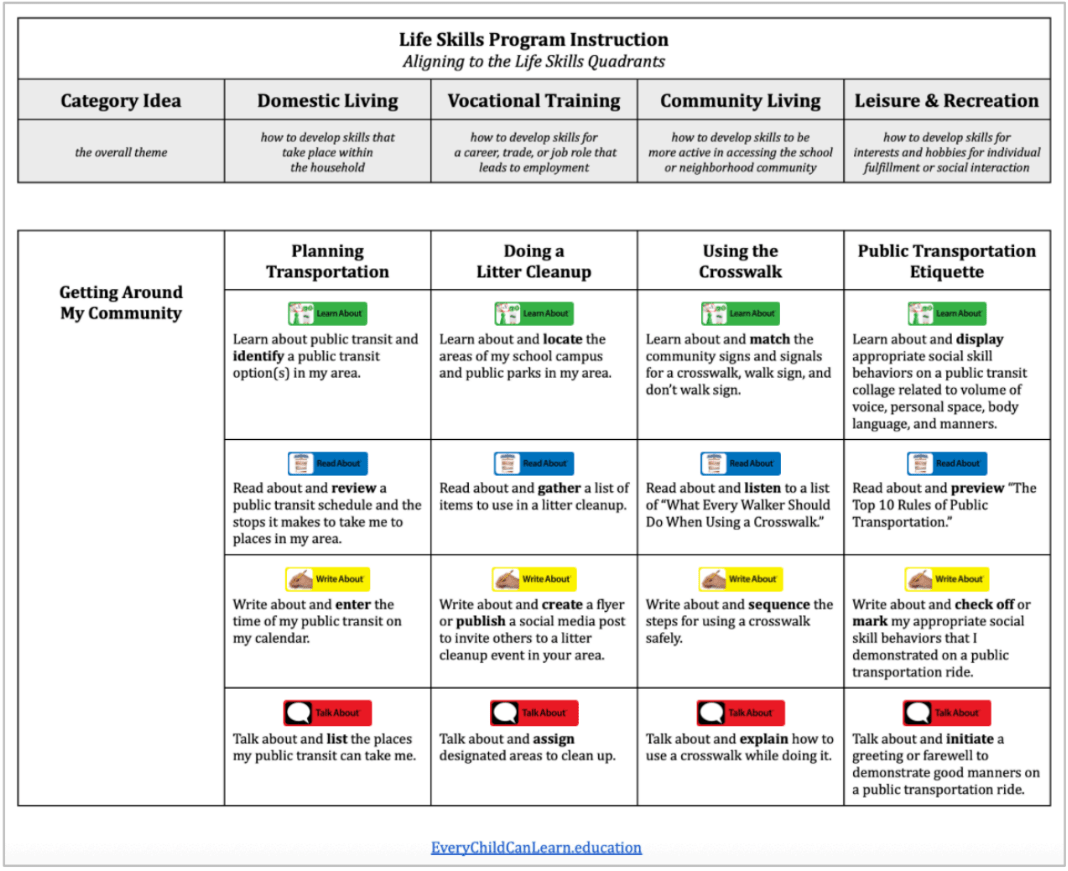
Example of Phyl Macomber’s Purposeful Life Skills Curriculum PlanningTM
This proven life skills curriculum planning is essential for equipping teachers with critical curriculum materials to teach their students the necessary skills to navigate daily life and succeed in various aspects of their personal and academic life.
Phyl skillfully guides educators in how to plan and teach step-by-step lessons in the following key topic areas of life skills:
- Effective Communication
- Decision-Making and Problem Solving
- Emotional Intelligence
- Financial Literacy
- Social Language Skills
- Independent Living Skills
- Personal Responsibility
- Social Emotional Learning Competencies
- Health and Wellness
- Career and Workplace Readiness
- Critical Thinking
- Time Management and Organization
- Digital Literacy
Purposeful planning with Phyl’s facilitation ensures a structured and purposeful approach to teaching these skills, leading to better outcomes for learners. It ensures a logical progression of skills and concepts.
Another unique aspect of this life skills approach includes Phyl demonstrating the lessons of how to put the planning into action in the classroom through her “real-time” classroom teaching.
Phyl excels at modeling lessons in the various content classes – engaging the primary teacher, instructional support staff, and students of diverse abilities to ensure they each have active roles in the lessons.
Teachers need to see new strategies in action – not just hear about them. When Phyl models lessons, it provides a clear visual representation of what effective teaching looks like, making it easier for educators and instructional support staff to grasp and implement new lessons.
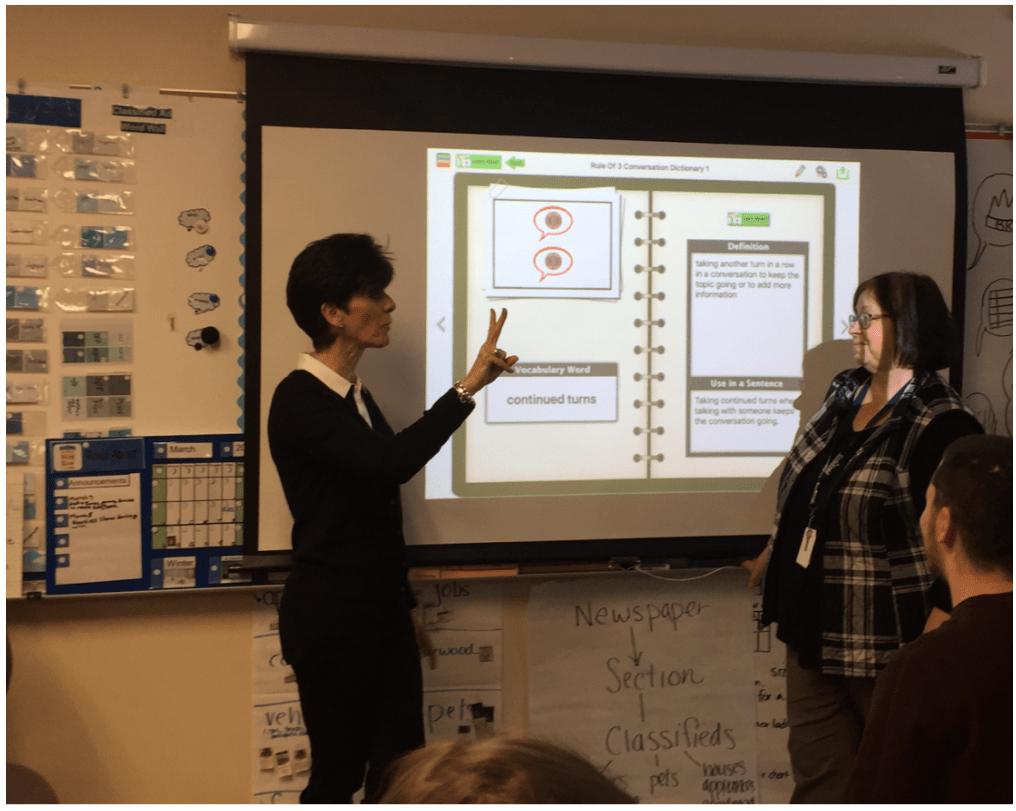
Phyl Macomber Uses a “Boost-on-the-Ground” Consultation Format Modeling Lessons
When she models lessons for teachers, Phyl provides a concrete example of how to perform a task or meet an expectation in the life skills curriculum. Watching Phyl successfully implement a lesson or strategy builds confidence in teaching staff and reduces their anxiety.
Phyl has a powerful approach in this professional development format because it bridges the gap between theory and practice. Phyl provides teaching staff with tangible examples of best practices. This helps them understand how to execute and adapt the lessons to their own unique classroom or student population.
In her “boots-on-the-ground” teaching format, Phyl encourages active participation and critical thinking as teachers join, observe, analyze, and discuss the lessons that she models. This leads the staff to a more impactful and effective learning experience.
As a result, staff learn the following:
- how to deliver the lesson
- build the skills in the learning targets
- understand the thought processes involved in the learning
- how to connect one lesson to the next
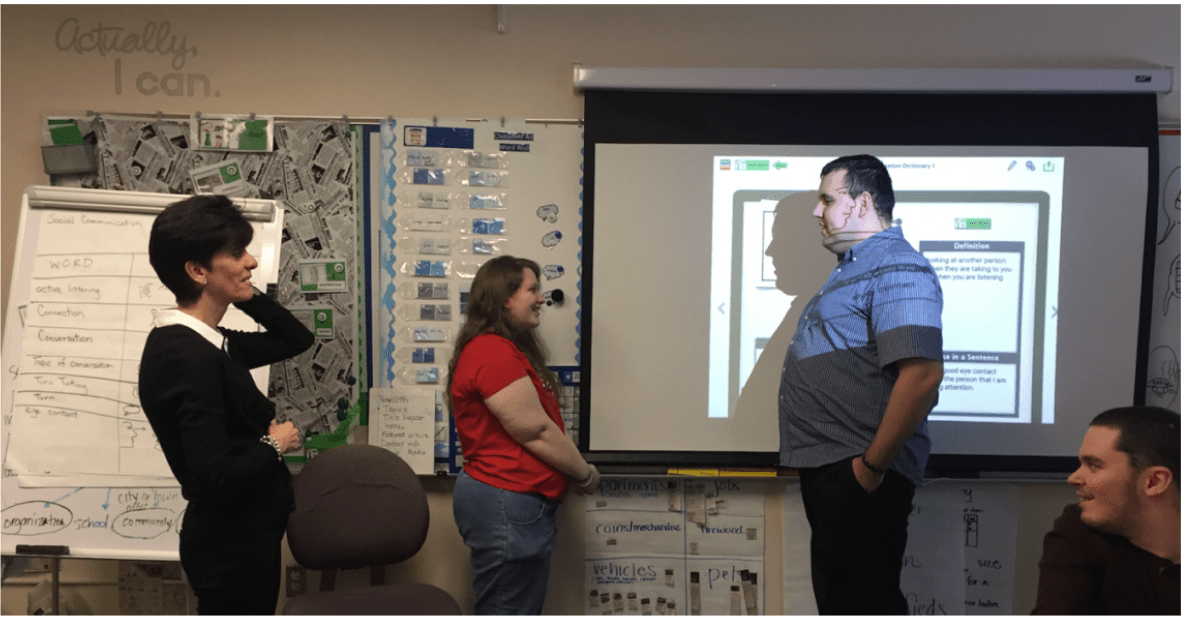
Everyone Knows What to Do and How to Do It in Engaging Lessons